

Can You Work Out, Sweat, Swim, and Wear a Hat With a Bonded Hair System?
An active-life guide for Lincoln clients who want realistic answers about sweat, water, friction, attachment, and maintenance before committing to a hair system.
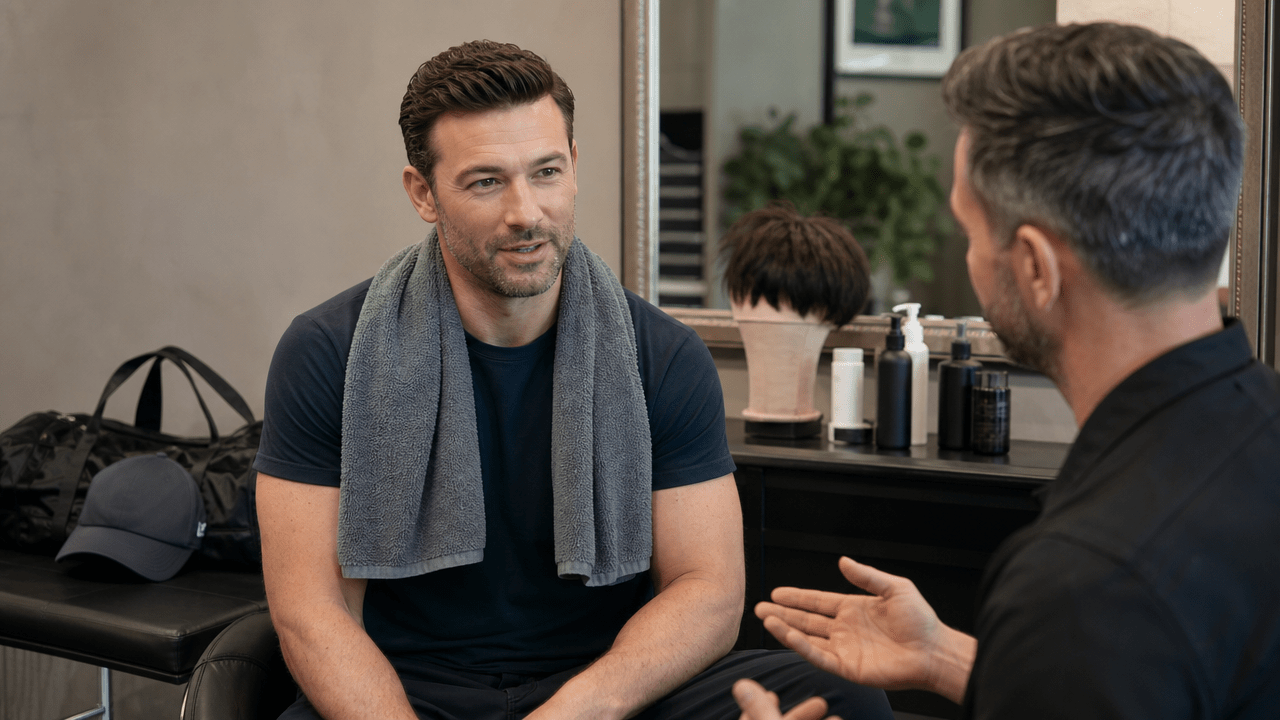
Start with your real routine, not the showroom version
One of the most useful things you can bring to a hair-replacement consultation is a normal week. Do you lift weights every morning? Run outdoors? Swim laps? Spend summer weekends at a lake? Wear a hard hat, baseball cap, motorcycle helmet, or cycling helmet? Travel frequently? Sweat heavily? Those details can influence attachment, base choice, styling, cleaning, and service frequency.
At The Hair Specialists in Lincoln, the practical conversation should include what you want the hair to look like and what you need it to tolerate. A system that looks excellent but conflicts with your everyday routine is not a good long-term match.
Exercise and sweat
Sweat itself does not automatically mean a bonded system cannot work for an active person. The bigger issue is what repeated moisture, skin oil, heat, friction, and cleansing do to the specific attachment. Some people need more frequent maintenance than others.
- Ask how soon after a fresh attachment your specific adhesive should be exposed to heavy sweating.
- Blot rather than aggressively rub the hairline after exercise.
- Follow the cleaning routine for the specific base and attachment rather than using harsh household solvents or random social-media hacks.
- If an edge repeatedly lifts after workouts, treat that as a fit or maintenance question, not something to hide with more adhesive.
Can you swim?
Swimming can be compatible with many systems, but pool chemicals, lake water, salt water, prolonged soaking, and repeated drying can affect both the hair and the attachment. The right advice depends on the exact system.
Before swimming
Ask whether the attachment has fully set, whether a swim cap makes sense for your system, and whether the hair needs a protective conditioning step.
After swimming
Rinse and care for the hair according to your professional’s instructions. Do not assume ordinary shampooing, vigorous towel drying, or aggressive brushing is appropriate for every base.
What about hats and helmets?
Hats can be part of normal life with a hair system. Friction is the variable to watch. Repeated rubbing at the same hairline or attachment point can stress hair, base material, clips, or the scalp beneath. Helmets add pressure and heat, so fit matters even more.
If you regularly wear occupational headgear or sports equipment, bring it to the consultation when practical. That gives the professional a much better idea of where contact and friction occur.
How often will a system need service or rebonding?
There is no honest universal number. Service frequency can vary with attachment method, skin chemistry, sweating, base design, environment, home-care habits, and the condition of the system. Anyone promising the same wear interval for every client is oversimplifying.
The better question is: What maintenance interval is realistic for my attachment and lifestyle? Ask what happens during service, what can safely be done at home, what should wait for a professional appointment, and what signs mean the system needs attention sooner.
What you can often manage at home
Home care should stay within the instructions for your specific system. That may include gentle styling, appropriate cleansing, conditioning, drying, and minor front-edge care if you have been taught how to do it safely. The site’s poly front-edge touch-up guide is a useful example of why base type matters.
Signs that it is time to call the studio
- Repeated lifting that returns soon after a touch-up.
- Persistent odor or residue you cannot remove with the recommended routine.
- Base tears, stretched material, shedding from the system, or attachment damage.
- Color or texture changes that no longer blend naturally with your growing hair.
- Scalp redness, sores, pain, significant itching, or drainage.
Scalp symptoms deserve special attention. A cosmetic hair-replacement studio can help with fit and maintenance, but new or unexplained scalp disease or hair loss may need evaluation by a dermatologist or other qualified medical professional.
How Nebraska weather changes the conversation
Lincoln clients can move between hot outdoor activity, air-conditioned interiors, cold weather, hats, wind, indoor gyms, pools, and travel through the year. Rather than creating a different system for every season, the useful approach is to understand how your attachment responds and adjust care or service timing when your routine changes.
Questions to ask at your first consultation
- Which base and attachment methods make sense for how much I exercise and sweat?
- Can I swim with this specific system, and what should I do afterward?
- How should I handle hats, helmets, and occupational headwear?
- What cleaning and styling products are appropriate for the hair and base?
- What maintenance can I do at home?
- How will I know when I need professional service?
- What affects the expected lifespan of this system?
- What happens if my activity level changes?
Bottom line
A hair system should be selected around your life, not the other way around. Exercise, sweat, swimming, hats, and an active schedule are all reasonable subjects to discuss before choosing a base or attachment plan. The most useful consultation is one where the professional knows how you actually spend your week.
Review Hair System Care and Maintenance, explore hair-replacement services, or book a private consultation in Lincoln.
Book a consultationHealth and hair-care reference
For general guidance on avoiding hair and scalp damage, see the American Academy of Dermatology’s hair-care resources. This article addresses cosmetic hair-system use and maintenance, not diagnosis or treatment of a medical hair-loss condition.
Generated editorial image is illustrative and does not depict an actual client or documented outcome. Reviewed September 20, 2026.


Leave A Comment
You must be logged in to post a comment.