
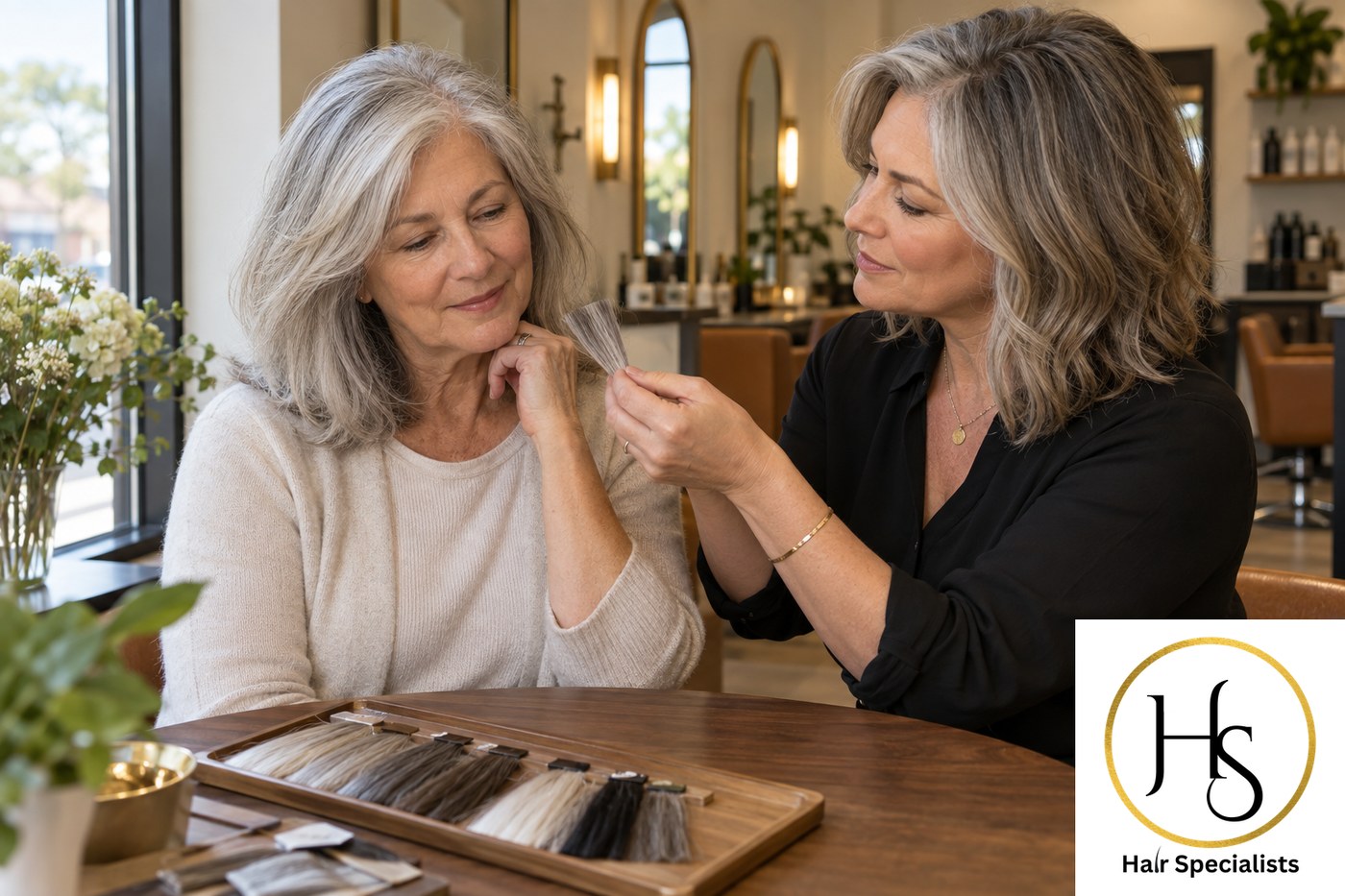
To match a topper with gray hair, compare the piece with the hair it will sit beside, then check the density, texture and cut together. A shade name alone cannot tell you whether the complete blend will feel like you. Bring your current hairstyle to the consultation and take time to look at the result from more than one angle.
Hair Specialists offers women’s wigs and toppers in Lincoln, with discussion of coverage, blending and fit. If you want to keep your silver strands or salt-and-pepper look while adding coverage, say that clearly. Choosing a topper does not require choosing a completely different color.
Begin with the coverage you want
A topper provides partial coverage and blends with existing hair. The National Alopecia Areata Foundation’s guide to wigs and toppers describes toppers as partial hairpieces available in different fibers. Your consultation should address where the base would sit and how it would attach, as well as the shade.
Point out the view you want to improve: the part in overhead lighting, the crown in a photo or an area that is difficult to style. Ask whether a proposed topper addresses that concern and whether your existing hair is suitable for its attachment method.
Look at your gray as a pattern, not one color
Study the areas where the topper and your own hair would meet. Are your front sections lighter than the back? Do you want a soft gray blend, bright silver or a stronger salt-and-pepper contrast? Show the fitter what you want to preserve rather than describing the goal only as “gray.”
Compare actual samples when possible. If you are deciding between shades, ask which one works with the hair around the intended coverage area. A color that looks attractive by itself may still create a boundary you dislike when placed beside your own hair.
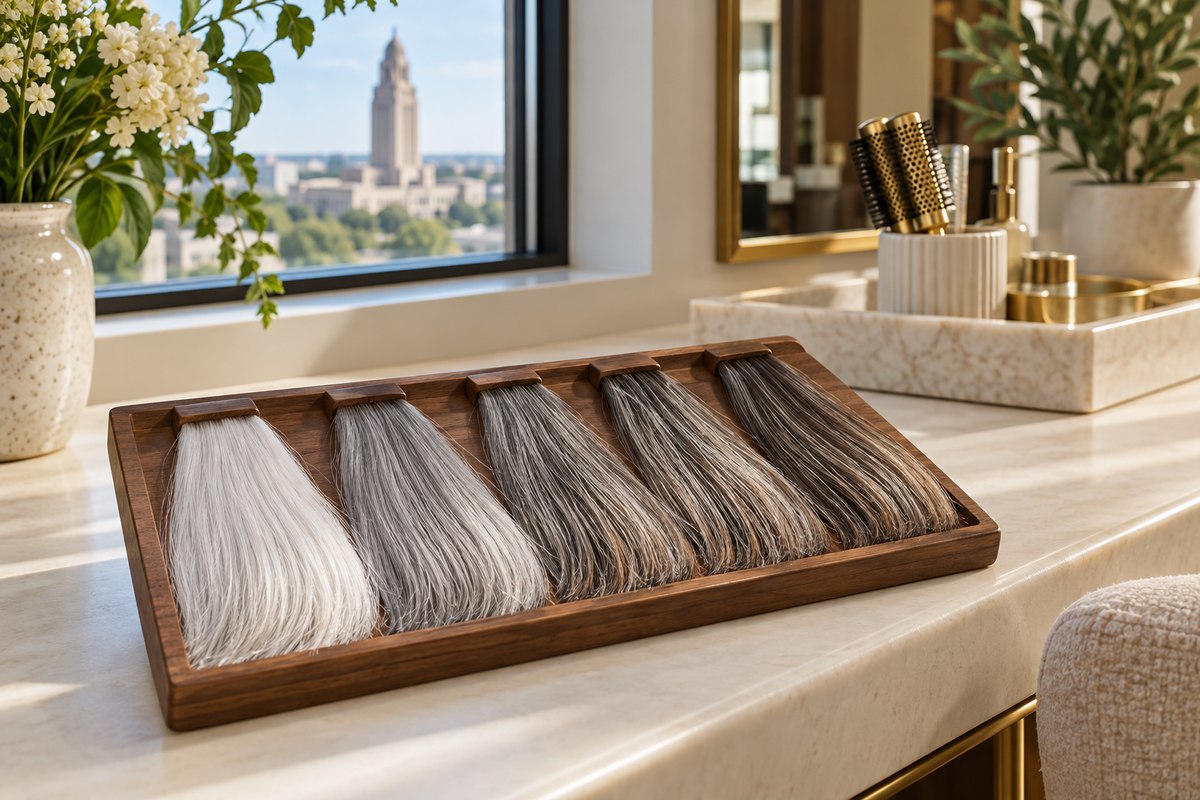
Use natural light as one of your checks
The American Cancer Society’s wig-selection guide recommends comparing color references in natural light. For a topper, use that as a practical starting point for discussing the blend. Ask to check the sample near a window as well as under the salon lighting.
A phone photo can help you remember what you discussed, but it should not be your only color reference. Look at the piece in person and ask your fitter to explain any difference between the sample and the available finished option.
Check fullness and texture alongside shade
Once the color is close, ask about the amount of hair and the way it moves. You might prefer a subtle addition rather than a dramatic increase in fullness. State that preference before selecting the piece.
Look at how the topper’s ends meet your existing hair. Does the wave or curl pattern work with your normal styling? Is the proposed length manageable? Ask whether shaping or blending is appropriate for the specific fiber and construction, and what styling you would need to repeat at home.
If you are planning fall family photographs in Lincoln, bring a description of the style you expect to wear. Then check the everyday version too. The topper should suit the routine you want after the photographs are taken.
Ask before attempting a color change
Do not assume that a topper can be colored like the hair growing on your head. Manufacturer instructions vary. In its educational example about coloring a human-hair topper, Jon Renau warns that results can be unpredictable and restricts which colors it considers suitable for alteration.
That example illustrates why the exact product matters; it is not a statement about Hair Specialists’ current inventory. Ask your fitter whether any proposed alteration is permitted by the manufacturer. Do not buy an unsuitable shade on the assumption that a home dye job will fix it.
Keep the choice connected to your routine
Before deciding, ask for a demonstration of putting on, removing, cleaning and styling the specific topper. Discuss your usual part, glasses, hair accessories and the time you want to spend getting ready. Explain whether you regularly color your own hair or plan to let more gray grow in, so you can discuss how future changes might affect the blend.
A topper adds cosmetic coverage. It does not diagnose the cause of thinning or establish regrowth. For new or unexplained hair loss, the American Academy of Dermatology recommends evaluation to identify the cause. Keep medical questions with your healthcare professional while you explore appearance options.
Explore a gray-hair topper blend with Hair Specialists in Lincoln. Book a consultation or call (402) 464-4111. The studio is at 1672 Van Dorn Street. Bring your questions about coverage, color and everyday care, and read what to expect at a consultation before your visit.
Generated editorial images illustrate color comparison. They are not actual Hair Specialists clients, staff, premises, inventory or documented outcomes.


Leave A Comment
You must be logged in to post a comment.